Enrollment Status

Not Enrolled

You are not enrolled in this course yet. Enroll to unlock lessons and post-test access.

COURSE OVERVIEW

Evidence In ACTION: Asymmetrical High Flow Therapy Part 3: Insights and Outcomes
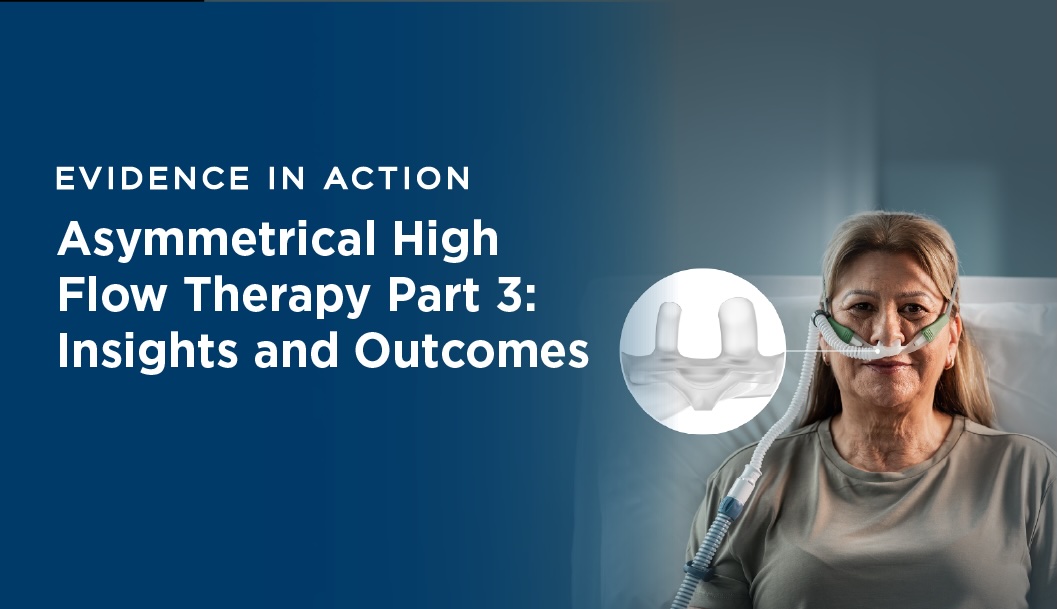
Evidence In ACTION: Asymmetrical High Flow Therapy Part 3: Insights and Outcomes
1 CE AARC Online Video
Course Credit Type
CE AARC
Course Faculty
Chris Hutchinson, Director of Clinical Affairs
Course Category
**Self-Study/On-Demand, Evidence in Action - Respiratory
Course Format
Online Video
Course Credit
1
Course Release Date
June 25, 2026
Course Expiration Date
June 30, 2028
Course Cost / Access
Included with your license benefits
Program Summary

Asymmetrical High Flow Therapy Part 3: Insights and Outcomes

Presenter: Chris Hutchinson, PGDip BE

Date: June 25, 2026

Course Description

Asymmetrical High Flow Therapy Part 3: Insights and Outcomes provides an advanced, practice-focused review of asymmetrical high flow therapy across a range of clinical care settings. Presented by Chris Hutchinson, PGDip BE, this activity examines implementation strategies, evaluates patient outcomes and clinical responses, and highlights practical insights that can support more effective use of asymmetrical high flow therapy.

Participants will explore how current evidence and real-world experience can be translated into clinical decision-making, with an emphasis on optimizing therapy delivery, assessing treatment response, and improving patient outcomes across diverse healthcare environments.

Learning Objectives

Upon completion of this activity, participants will be able to:

  • Evaluate asymmetrical high flow therapy implementation strategies across care settings.
  • Analyze asymmetrical high flow therapy outcomes and patient responses.
  • Apply clinical insights to optimize asymmetrical high flow therapy practice.
Objectives

Learning Objectives

Upon completion of this activity, participants should be able to:

  • Describe the physiological principles underlying high-flow therapy.
  • Review the latest clinical evidence supporting the use of high-flow therapy for critically ill patients in the intensive care unit (ICU).
  • Implement evidence-based strategies for utilizing high-flow therapy in the ICU to optimize patient outcomes.