Enrollment Status

Not Enrolled

You are not enrolled in this course yet. Enroll to unlock lessons and post-test access.

COURSE OVERVIEW

Evidence In ACTION: Supporting Tiny Lungs: Optimizing CPAP Therapy
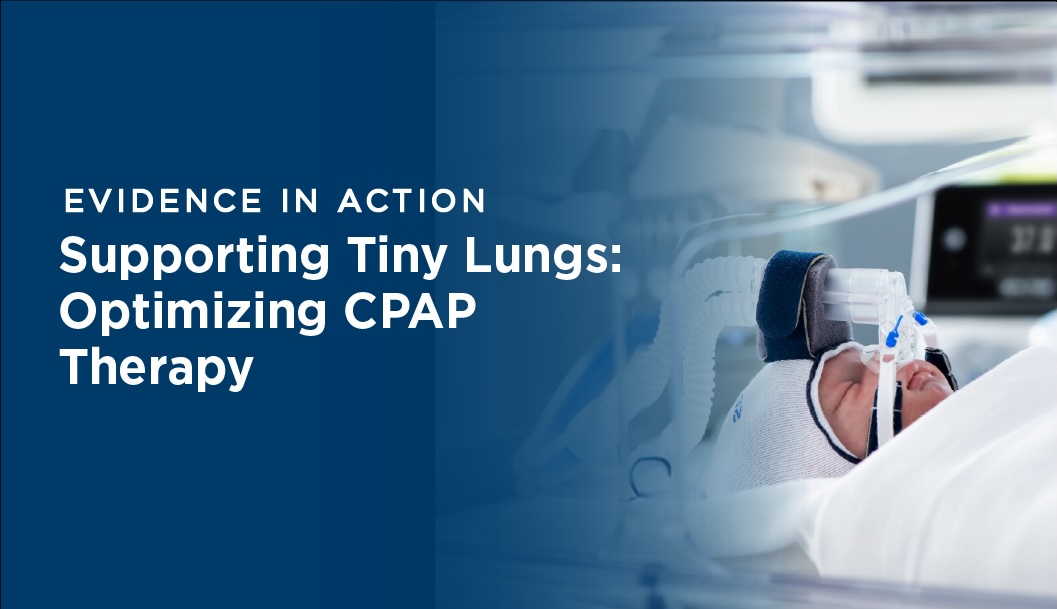
Evidence In ACTION: Supporting Tiny Lungs: Optimizing CPAP Therapy
1 CE AARC Online Video
Course Credit Type
CE AARC
Course Faculty
Carolyn La Vita, MHA, RRT, RRT-ACCS, RRT-NPS
Course Category
Evidence in Action - Respiratory
Course Format
Online Video
Course Credit
1
Course Release Date
September 22, 2026
Course Expiration Date
October 5, 2027
Course Cost / Access
Included with your license benefits
Program Summary

Supporting Tiny Lungs: Optimizing CPAP Therapy

Presenter: Carolyn La Vita, MHA, RRT, RRT-ACCS, RRT-NPS

Course Description

Supporting Tiny Lungs: Optimizing CPAP Therapy reviews how continuous positive airway pressure (CPAP) supports the developing lungs of preterm infants. Presented by Carolyn La Vita, MHA, RRT, RRT-ACCS, RRT-NPS, this activity covers the neonatal physiology that places preterm infants at risk for bronchopulmonary dysplasia (BPD), how CPAP helps protect the lungs from injury, and what current evidence shows about occlusive and nonocclusive CPAP interfaces.

Participants will see how evidence from a CPAP practice change can be translated into bedside decision-making, with an emphasis on effective pressure delivery and lung protection in the neonatal intensive care unit (NICU).

Learning Objectives

Upon completion of this activity, participants will be able to:

  • Explain neonatal physiology, bronchopulmonary dysplasia (BPD) development, and the role of CPAP in lung protection.
  • Compare occlusive and nonocclusive CPAP interfaces using current evidence.
  • Apply clinical insights from a CPAP practice change to bedside decision-making.
Objectives

Learning Objectives

Upon completion of this activity, participants should be able to:

  • Explain neonatal physiology, bronchopulmonary dysplasia (BPD) development, and the role of CPAP in lung protection.
  • Compare occlusive and nonocclusive CPAP interfaces using current evidence.
  • Apply clinical insights from a CPAP practice change to bedside decision-making.